
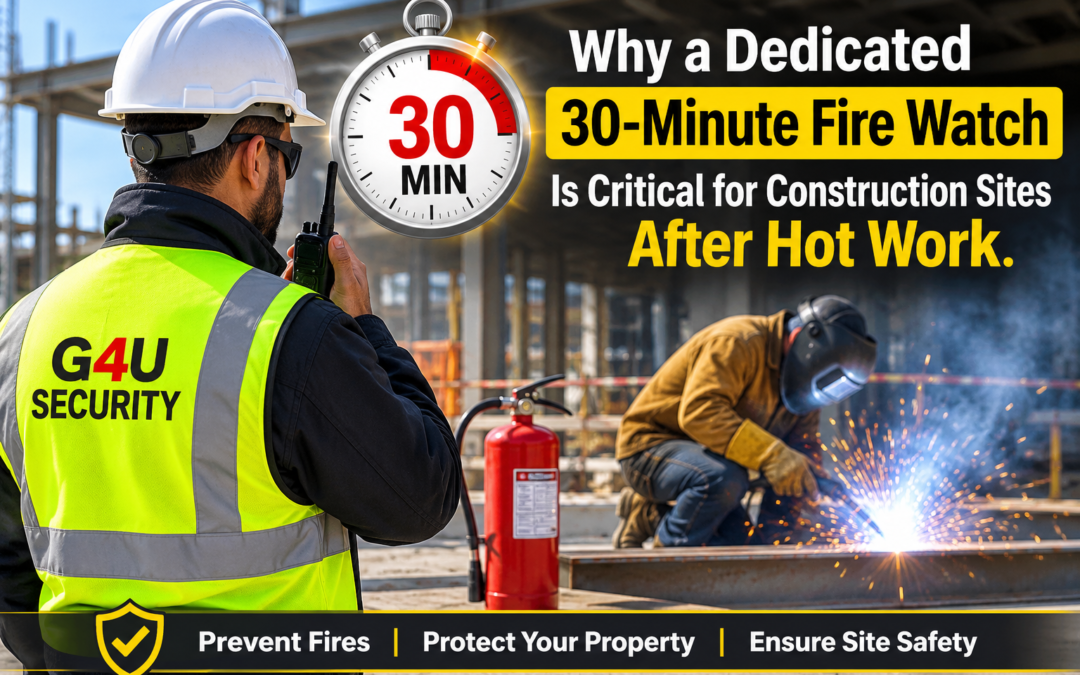
Construction sites involve many activities that can create serious fire hazards, making fire watch security essential after hot work operations. Tasks such as welding, cutting, grinding, soldering, and torch applications produce sparks, heat, and molten metal that can easily ignite nearby combustible materials. The risk of fire does not necessarily disappear when the work is finished. A spark may land in a hidden area, smoulder inside insulation, or ignite nearby materials several minutes after workers have left.
This is why a dedicated 30-minute fire watch is critical for construction sites after hot work. Having a trained professional monitor the work area after the activity is completed helps identify potential fire hazards early, prevent small incidents from becoming major emergencies, and protect workers, property, and surrounding structures.
1. Fire Risks May Persist After Hot Work Ends
One of the biggest misconceptions about hot work is that the fire risk ends once the welding machine or cutting torch is switched off. In reality, sparks and hot metal fragments can travel well beyond the immediate work area and remain hot enough to cause ignition.
Construction sites often contain combustible materials such as wood, cardboard, insulation, plastic coverings, packaging, and construction waste. Sparks can enter small openings, fall through floor gaps, or reach concealed spaces where they can start a fire without being immediately noticed.
These risks can be reduced through a dedicated fire watch that continues monitoring the area for at least 30 minutes after hot work is completed. This additional monitoring period gives trained fire watch personnel an opportunity to identify smoke, unusual heat, smouldering materials, or other early warning signs before a fire spreads.
Learn more about how professional fire watch security services help protect properties and work environments from potential fire hazards.
2. Hidden Fires Can Develop Without Immediate Warning
Not all fires begin with visible flames. Some start slowly inside walls, ceilings, floor cavities, or insulation. A small spark can ignite combustible material and continue smouldering for several minutes before producing enough heat or smoke to become noticeable.
These hidden ignition points are particularly dangerous on construction sites because buildings may have exposed framing, temporary coverings, unfinished electrical systems, and multiple concealed spaces.
A trained fire watch officer understands the importance of inspecting beyond the exact location where hot work was performed. During the post-work monitoring period, they can check nearby combustible materials, surrounding surfaces, openings, and other areas that may have been exposed to sparks or heat.
This proactive approach reduces the chances of an undetected fire developing after workers have moved on to another task or left the area.
3. Dedicated Fire Watch Provides Continuous Attention
Construction sites are busy environments where workers, supervisors, and contractors manage several responsibilities simultaneously. Expecting someone to monitor fire risks while performing other duties can result in missed warning signs.
A dedicated fire watch ensures that one assigned individual remains focused on fire prevention and monitoring. Their responsibility is not simply to stand near the hot work area but to actively observe potential hazards, inspect surrounding conditions, and respond quickly if something unusual occurs.
Having a dedicated person also improves accountability. Site supervisors know who is responsible for post-hot-work monitoring, when the monitoring period begins, and when the area has been inspected and cleared.
This level of supervision is particularly valuable on large construction projects where multiple contractors may be working in different areas.
4. Early Detection Can Help Prevent Costly Construction Fires
A construction site fire can result in significant financial and operational consequences. Damage to building materials, equipment, tools, and unfinished structures can lead to expensive repairs. In more serious situations, fires may cause injuries, project delays, insurance complications, and damage to neighbouring properties.
A dedicated 30-minute fire watch provides an additional opportunity to identify developing fire hazards before they escalate.
For example, if a fire watch officer notices smoke coming from insulation near a recently completed welding area, they can immediately follow the site’s emergency procedures, notify the appropriate personnel, and initiate an appropriate response.
Early intervention can make a significant difference in controlling an incident. It also helps construction companies maintain safer working conditions and reduce avoidable disruptions.
Along with fire prevention, professional construction site security services help protect construction projects against unauthorized access, theft, vandalism, and other security concerns.
5. Fire Watch Personnel Must Know What to Look For
An effective fire watch requires more than simply assigning someone to remain on-site for 30 minutes. The individual must understand common hot work hazards, recognize early signs of ignition, and know how to respond safely.
During the monitoring period, fire watch personnel should:
-
Inspect the immediate hot work area and surrounding spaces.
-
Look for smoke, sparks, smouldering materials, and unusual heat.
-
Check nearby combustible materials and areas exposed to flying sparks.
-
Inspect openings, floor gaps, and concealed spaces where ignition may occur.
-
Keep appropriate fire extinguishing equipment accessible.
-
Immediately report suspicious conditions or signs of fire.
-
Follow established emergency procedures when an incident occurs.
Fire watch personnel should also understand when a situation requires evacuation and emergency services rather than attempting to control a fire themselves.
Proper training, awareness, and attention to detail are essential for effective fire watch operations.
6. Supporting Construction Site Safety and Compliance
Fire prevention is an essential part of construction site safety management. Hot work activities should be supported by appropriate permits, risk assessments, fire prevention measures, and post-work inspections.
A 30-minute fire watch is a commonly used minimum monitoring period following hot work, but it should not automatically be considered sufficient for every situation. Depending on applicable fire codes, site procedures, insurance requirements, and the level of risk, a longer monitoring period may be necessary.
Construction managers should ensure that their fire watch procedures follow applicable regulations and that personnel understand their responsibilities before hot work begins.
Working with professional security and fire watch personnel can also help construction companies maintain consistent safety practices throughout their projects. Combining fire watch operations with appropriate construction site security provides an additional layer of protection for workers, equipment, and valuable construction assets.
Professional Fire Watch Services to Protect Your Construction Site
Hot work creates fire hazards that can remain long after welding, cutting, or grinding has been completed. A dedicated 30-minute fire watch provides an important layer of protection by identifying hidden ignition sources, monitoring surrounding areas, and ensuring that potential problems receive immediate attention.
At G4U Security, we understand the importance of maintaining safe construction environments. Our professional security services help businesses and construction teams manage site safety, monitor potential hazards, and maintain a secure working environment.
Whether your project involves welding, cutting, grinding, or other hot work activities, having trained personnel available to monitor fire risks can make a meaningful difference.
Contact G4U Security today to learn more about our fire watch security services and professional security solutions for your construction site.