
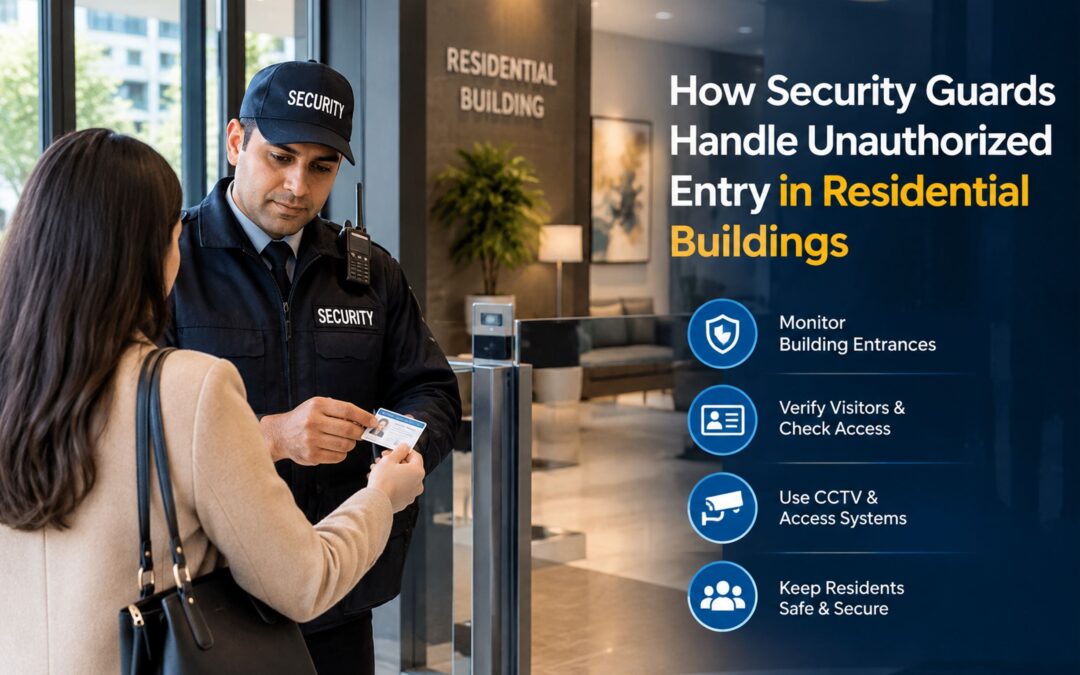
Condominium security in Alberta plays an important role in preventing unauthorized entry and keeping residents safe. In apartment buildings, condominiums, and residential communities, someone might follow a resident through a secured entrance, enter without permission, or claim to be visiting someone without providing clear details. Even a small gap in security can put residents and their property at risk.
This is where professional residential security guards make a difference. They monitor entrances, check visitors, and respond to suspicious access attempts. Their job is not just to stand at the door. It is to stay alert, follow building procedures, and help residents feel safe in their homes.
A well-planned security system can keep unauthorized people out while allowing residents, visitors, and approved service providers to enter without unnecessary delays.
Why Unauthorized Entry Is a Concern for Condominium Security in Alberta
Residential buildings often have several access points. These include main entrances, underground parking garages, side doors, loading areas, and emergency exits. If these areas are not monitored properly, an unauthorized person may find a way inside.
Some entry attempts are easy to notice. Others may look completely normal at first. Someone might follow a resident through a locked door or claim to have forgotten their access card. Another person may say they are a delivery driver, contractor, or guest.
Not every unfamiliar person is a threat. The challenge is to verify access without making residents and legitimate visitors feel uncomfortable.
Trained security guards help manage this balance by following consistent procedures instead of making assumptions based on appearances.
How Security Guards Prevent Unauthorized Access
1. Checking Visitors at the Main Entrance
One of the first responsibilities of a residential security guard is to monitor the main entrance.
When a visitor arrives, the guard may ask who they are visiting and request the information required by the building’s access policy. Depending on the property’s procedures, the guard may contact the resident or check an approved visitor list before allowing entry.
Contractors, maintenance workers, and other service providers may need additional verification.
These checks help ensure that visitors have permission to enter. They also create a clear process that residents and guests can understand.
2. Preventing Tailgating
Tailgating happens when an unauthorized person follows a resident through a secured entrance without using their own access card or receiving approval.
It can happen in seconds. A resident opens the door, someone approaches behind them, and the second person walks inside before the door closes.
Security guards watch for this behaviour and may politely ask the person to use their own credentials or complete the visitor check-in process.
Residents can also help by avoiding holding secured doors open for unfamiliar people. Being friendly is understandable, but access rules should apply consistently to everyone.
3. Monitoring Parking Garages and Secondary Entrances
The main entrance is not the only area that needs attention. Underground parking garages, side doors, loading areas, and other access points can create security gaps.
Depending on the assignment, guards may conduct regular patrols, check doors, monitor access activity, and report signs of forced entry or unusual behaviour.
They may also notice doors that fail to close properly or access systems that are not working as expected.
Finding these problems early allows building management to arrange repairs and reduce the risk of unauthorized entry.
What Happens When Someone Tries to Enter Without Permission?
Security guards need to respond calmly and follow the property’s procedures. A suitable response usually involves several steps.
Step 1: Approach and Verify
The guard may approach the person, explain the building’s entry requirements, and ask about the purpose of their visit.
If the person claims to be visiting a resident, the guard can follow the approved process to confirm the visit.
Step 2: Refuse Unauthorized Entry
If the person cannot provide the required information or permission is not confirmed, the guard follows the building’s access policy. This may involve refusing entry and asking the person to leave the secured area.
Professional communication is important. Guards should avoid unnecessary confrontation and follow their training.
Step 3: Contact the Appropriate People
If the situation continues or becomes suspicious, the guard may contact the building manager, supervisor, or another designated person.
If there is an immediate threat, suspected break-in, or risk of violence, emergency services should be contacted as appropriate.
Step 4: Record and Report the Incident
After an incident, the guard should document relevant details, including the time, location, behaviour observed, actions taken, and people notified.
Accurate reports help building management identify recurring problems and decide whether access procedures need to change.
The Role of CCTV and Access Control Systems
Security technology can support guards, but it cannot replace active monitoring and good judgment.
CCTV cameras can help security personnel monitor entrances, parking areas, and shared spaces. Access cards, intercoms, visitor logs, and electronic entry systems can also help confirm who is permitted to enter.
When these tools are combined with regular patrols and clear procedures, they can improve a building’s overall security.
Building management should ensure that cameras and access systems are maintained properly. Privacy requirements and applicable laws must also be considered when collecting, viewing, or storing security footage.
Why Professional Condominium Security Matters
A residential security guard provides more than a visible presence. Guards help enforce access rules, assist residents and visitors, identify potential security concerns, and communicate with building management.
Their response should be based on training, site instructions, and the circumstances of each incident. Someone should not be treated as a trespasser simply because they look unfamiliar. Verification, clear communication, and fair treatment are essential.
For property managers, choosing a security provider with suitable training and experience can make a meaningful difference to daily operations.
Protect Your Residential Property with G4U Security
Preventing unauthorized entry requires alert security personnel, reliable access systems, and cooperation between residents and building management.
G4U Security provides security services to help properties manage risks and maintain safer environments. Residential security arrangements can be tailored to a building’s entrances, visitor procedures, parking facilities, and specific security concerns.
Learn more about G4U Security’s condominium security services or connect with G4U Services on Facebook.
A secure residential building starts with consistent access control. When security guards follow clear procedures, respond calmly, and report concerns promptly, they help protect residents while allowing everyday activities to run smoothly.