
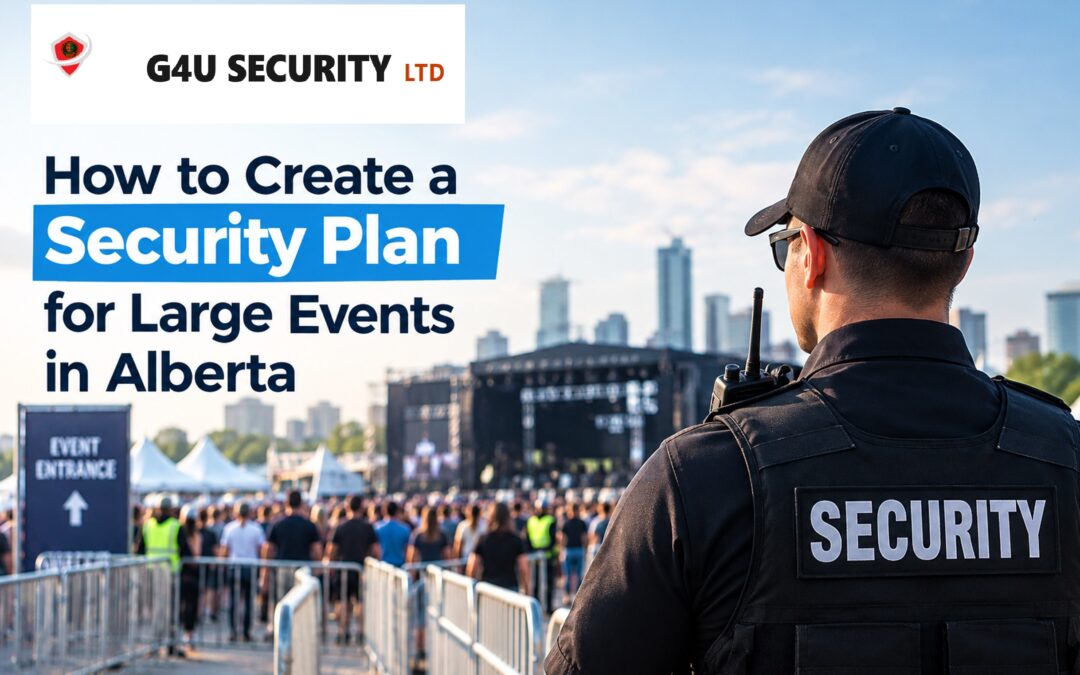
Planning a security plan for large events in Alberta takes more than booking a venue, hiring entertainment, and inviting guests. Whether you are organizing a corporate conference in Edmonton, a music festival in Calgary, a sporting event in Red Deer, or a community gathering elsewhere in Alberta, safety should be a priority from the beginning.
An effective event security plan helps organizers identify potential risks, control access, manage crowds, and respond to emergencies. It also gives security personnel, venue staff, vendors, and emergency responders a clear understanding of their responsibilities.
In this guide, we explain how to create a practical security plan for large events in Alberta, from risk assessment and guard deployment to emergency procedures and post-event reviews.
1. Assess Security Risks Before Planning a Large Event in Alberta
Every event has different security requirements. A daytime business conference may need controlled access and visitor registration, while a large outdoor festival may require crowd management, perimeter patrols, and emergency evacuation procedures.
Start by evaluating the event’s size, location, duration, expected attendance, and activities. Ask yourself the following questions:
-
How many attendees, staff members, vendors, and contractors are expected?
-
How many entrances and exits are there?
-
Are any areas restricted to authorized personnel?
-
Will alcohol be served?
-
Are VIP guests, performers, or valuable equipment involved?
-
Could severe weather, overcrowding, or traffic congestion create safety concerns?
-
Have previous incidents or site-specific risks been identified?
Documenting these details helps determine the appropriate security arrangements. A professional security assessment can also identify vulnerabilities that event organizers might otherwise overlook.
2. Determine How Many Security Guards Your Event Needs
There is no single guard-to-attendee ratio that works for every event. Staffing requirements depend on the venue layout, crowd behaviour, activities, access points, and potential risks.
A conference held in a single hall requires a different deployment strategy than an event with multiple entrances, a backstage area, VIP seating, and a large parking lot.
Your security plan should identify where guards are needed and what each person will be responsible for. Common assignments include:
-
Entrance security: Checking tickets, credentials, and authorized access.
-
Crowd management: Monitoring queues and preventing congestion.
-
Perimeter security: Monitoring exterior boundaries and vulnerable access points.
-
VIP and backstage security: Protecting restricted areas and designated guests.
-
Mobile patrols: Monitoring parking areas and less frequently occupied sections.
-
Incident response: Addressing disturbances and escalating serious incidents appropriately.
Working with a professional event security guard service in Edmonton and across Alberta can help organizers determine staffing levels based on an assessment of the venue and event risks rather than attendance numbers alone.
3. Establish Clear Entry and Access Control Procedures
Uncontrolled access can create unnecessary risks, particularly at crowded festivals, concerts, sporting events, and public celebrations.
Develop a clear entry process before the venue opens. Determine where attendees will enter, how tickets will be verified, and which areas require special credentials.
Depending on the event, access control measures may include:
-
Guest-list and ticket verification.
-
Wristbands and staff identification.
-
Bag screening where appropriate and permitted.
-
Separate entrances for vendors, performers, and staff.
-
Clearly marked restricted areas.
-
Controlled access to backstage spaces and equipment storage.
Security personnel should also understand how to handle denied entry, suspicious behaviour, and disagreements professionally.
For large venues, separating entry and exit routes can help reduce congestion. Keep emergency exits unobstructed and ensure security arrangements do not interfere with evacuation routes.
For additional support with entry management and crowd movement, explore G4U Security’s crowd control security services.
4. Develop an Emergency Response Plan for Large Events
A comprehensive security plan for large events in Alberta must explain what to do when something goes wrong.
Potential emergencies include medical incidents, fires, severe weather, aggressive behaviour, missing persons, suspicious packages, and overcrowding. The appropriate response depends on the circumstances and guidance from emergency services.
Your emergency plan should identify:
-
Emergency exits and evacuation routes.
-
Assembly points and designated safe areas.
-
First-aid locations and emergency vehicle access routes.
-
Communication procedures for guards and event managers.
-
Responsibilities for contacting emergency services.
-
Procedures for suspending activities or evacuating the venue.
-
Escalation procedures for serious incidents.
Event organizers should review applicable municipal requirements, venue safety rules, fire regulations, and relevant provincial requirements before the event. Depending on the location and event type, additional permits, inspections, or approvals may be necessary.
Brief security guards, supervisors, and key staff on the plan before the event begins. Everyone should know whom to contact and how to communicate urgent information.
For general emergency preparedness information, consult the Government of Alberta and Public Safety Canada.
5. Coordinate Security With Event Staff and Emergency Services
Event security works best when everyone understands their responsibilities.
Establish a clear chain of command involving the event manager, security supervisor, venue representatives, and other relevant personnel. Radios or another reliable communication system can help staff share updates quickly.
Before the event begins, review:
-
Staff duties and assigned security zones.
-
Incident reporting procedures.
-
Emergency contacts and communication channels.
-
Procedures for escalating serious incidents.
-
Coordination with police, fire services, and emergency medical providers where appropriate.
A designated security supervisor can oversee operations, redeploy personnel when necessary, and ensure that important incident reports reach the right people.
Clear communication helps event teams respond more effectively when conditions change or unexpected problems arise.
6. Plan Traffic, Parking, and Crowd Movement
Traffic management is an important part of security planning for large events, particularly when thousands of people may arrive or leave within a short period.
Identify vehicle entrances, pedestrian routes, parking areas, loading zones, and emergency vehicle access points. Consider how attendees will move between entrances, seating areas, washrooms, food vendors, and exits.
Use appropriate signage, barriers, and trained personnel to guide attendees. Separate pedestrian and vehicle movement wherever practical, and avoid positioning queues where they could obstruct emergency access.
For outdoor events in Alberta, consider how changing weather, poor lighting, and uneven surfaces could affect crowd movement and visibility.
If your event involves a large outdoor area or multiple access points, include these considerations in your site assessment and security deployment plan.
7. Document Incidents and Review the Security Plan
A security plan should remain useful throughout the event, not simply exist as a document prepared before opening.
Security personnel should record relevant incidents, observations, access issues, and actions taken. Accurate reporting helps event managers understand what happened and make informed decisions.
After the event, review the security operation with supervisors and organizers. Identify:
-
Areas where queues or congestion developed.
-
Communication problems between teams.
-
Staffing or deployment gaps.
-
Incidents that required additional attention.
-
Procedures that worked well and should be retained.
Use these findings to improve future events and make better-informed security decisions.
Why Professional Event Security Is Important in Alberta
Managing security internally can place considerable pressure on event organizers, particularly when multiple entrances, large crowds, restricted areas, and emergency procedures must be coordinated simultaneously.
G4U Security Ltd provides professional security guard and event security services in Alberta, including Edmonton, Calgary, Red Deer, and surrounding communities.
Depending on the event’s requirements, security arrangements may include access control, crowd management, perimeter monitoring, mobile patrols, incident reporting, and customized guard deployment.
G4U Security’s festival and event security services in Alberta support organizers planning festivals, concerts, sporting events, community celebrations, and other gatherings.
Working with an experienced security provider helps organizers establish clear responsibilities, improve visibility across the venue, and prepare for potential disruptions.
Create a Security Plan for Your Next Alberta Event
Successful events depend on more than attendance and entertainment. They also require careful planning, effective communication, responsible crowd management, and security personnel who understand their responsibilities.
Start planning early, assess potential risks, establish emergency procedures, and ensure everyone involved understands the security arrangements before attendees arrive.
Planning a large event in Alberta? Contact G4U Security Ltd to discuss your event security requirements and develop an approach tailored to your venue, expected attendance, and operational needs.