
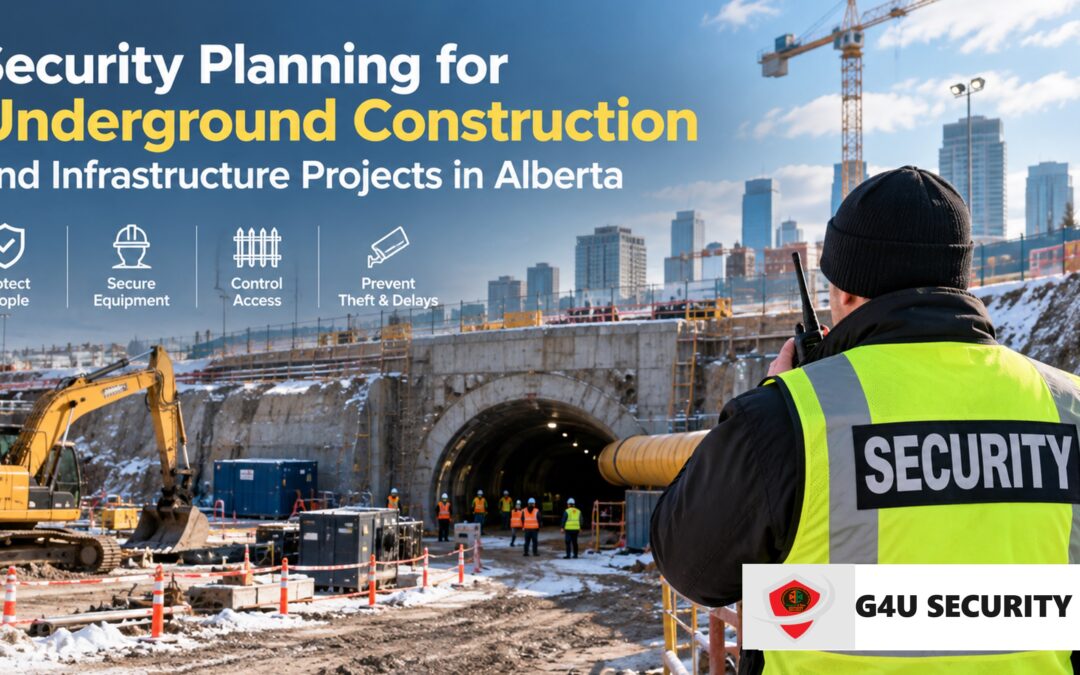
Security planning for underground construction in Alberta is essential for protecting workers, equipment, materials, and nearby public areas. Work may take place beneath busy streets, near utility lines, or around public spaces. Tools, fuel, and building materials may remain on-site overnight. Without proper security, theft, trespassing, or damage can lead to expensive delays.
For contractors working on underground utilities, drainage systems, tunnels, and municipal infrastructure, security should be part of the project from the start. A practical plan helps reduce risks and keeps the worksite better protected as the project progresses.
Why Underground Construction Sites Need Security
Underground construction sites are different from typical building sites. Access points may cover a large area, and work zones can change as excavation progresses. Crews may open new sections of ground, move barriers, or relocate equipment.
If the site is not checked regularly, these changes can create security gaps. Unauthorised visitors may enter restricted areas without understanding the danger. Thieves may also take advantage of poor lighting, unsecured gates, or gaps in fencing.
Professional construction site security in Alberta can help contractors manage these risks through access control, site checks, and security patrols.
Start With a Site Security Assessment
Before work begins, walk around the site and identify the areas that need the most attention. Look at open excavations, temporary access roads, equipment storage areas, fuel tanks, and locations where valuable tools are kept.
Check nearby sidewalks, roads, parking areas, and public access points. Then ask a few practical questions:
-
Can someone enter the site without being noticed?
-
Are fences, barriers, and gates suitable for the work being carried out?
-
Is valuable equipment visible from public roads?
-
Are there poorly lit areas that need attention?
-
Who checks the site after workers leave?
-
What happens if an alarm sounds or an unauthorised person enters?
Your answers will help determine whether the site needs security guards, mobile patrols, better lighting, access controls, or other protective measures.
Review the assessment regularly. A site that was secure during the first week may present new risks as excavation expands or more equipment arrives.
Control Access to the Construction Site
Keeping unauthorised people away from active work areas is one of the most important parts of construction security. Use suitable fencing, barriers, gates, and warning signs to separate the work zone from public spaces.
Secure gates when the site is unattended, and limit keys or access codes to authorised personnel. For larger projects, keep a record of workers, subcontractors, deliveries, and approved visitors. This makes it easier to identify who should be on-site.
Access control is especially important around open trenches and underground work areas. Unauthorised entry can lead to serious injuries, equipment damage, and project delays. Barriers should remain in place outside working hours, with checks carried out at the end of each shift.
Protect Construction Equipment, Tools, and Materials
Theft can cause major problems for construction teams. Missing tools or damaged equipment can delay work and increase replacement costs.
Underground infrastructure projects may involve pumps, generators, compressors, power tools, fuel, copper materials, and other valuable items. Smaller tools can be particularly easy to steal if they are left unattended.
Here are some practical ways to protect construction equipment and materials:
-
Store valuable tools and materials in locked areas.
-
Record equipment details and serial numbers.
-
Mark tools to make identification easier.
-
Avoid leaving expensive equipment in plain view near public roads.
-
Assign workers responsibility for securing storage units and gates.
For additional protection, consider construction equipment security services to help reduce the risk of theft and unauthorised access.
Use Security Guards and Mobile Patrols
Security patrols can provide extra protection when construction work takes place across several locations or equipment must remain on-site overnight.
A trained security guard can check gates, inspect vulnerable areas, look for signs of tampering, and report suspicious activity. A visible security presence may also discourage trespassing and theft.
For larger projects, mobile security patrols can be useful. Patrol officers can visit different work zones, inspect fencing and lighting, and check areas that do not have a permanent guard.
The right option depends on the size of the site, the value of the equipment, working hours, and the risks identified during the security assessment. Some projects may need a guard on-site, while others may benefit from scheduled or random patrol visits.
Prepare for Alberta’s Changing Weather
Alberta’s weather can create additional challenges for construction security. Snow, ice, wind, and poor visibility may affect fencing, lighting, access points, and patrol routes.
During winter, snow can cover warning signs or make changes around an excavation harder to see. Ice can also make it more difficult for workers and security personnel to move safely around the site.
After severe weather, inspect the work area and repair damaged barriers when it is safe to do so. Check that lighting is working properly and keep access routes clear for authorised staff and emergency responders.
Security personnel should also understand the site’s emergency procedures and know who to contact if they discover a damaged fence, an unsafe excavation, or a possible break-in.
Keep Security and Construction Teams Connected
Security works best when everyone understands their responsibilities. Guards, site supervisors, equipment operators, and subcontractors should know how to report concerns and who is responsible for responding.
Before the project starts, share important contact numbers and agree on a simple reporting process. Clear communication helps the team respond quickly when an incident occurs.
Security personnel should not attempt to handle dangerous excavation or utility hazards beyond their training. They should report the issue, keep people away when safe to do so, and follow the site’s emergency procedures.
Regular check-ins between security staff and site managers can also help identify new risks as the project develops.
Include Security in Your Underground Construction Plan
Good security planning does not have to be complicated. Start with a site assessment, control access, protect valuable equipment, and decide how the worksite will be checked outside working hours. Review the plan whenever site conditions or work areas change.
These steps can help reduce theft, limit unauthorised access, and prevent avoidable disruptions on underground construction and infrastructure projects in Alberta.
If you are planning a construction project and need help protecting your site, visit G4U Security to learn more about available services. You can also follow G4U Security on Facebook for company updates.
A practical security plan, supported by reliable security personnel, can help your team focus on the job while keeping equipment, materials, and the surrounding area better protected.